
Sports, Media and Creator Contracts: Players, Leagues, Sponsors, Influencers and Production Houses
Sports and media work runs on contracts.
In brief
- Sports and media work runs on contracts. Typical ones are:
- player and coach agreements;
- league participation;
- sponsorship and endorsements;
- image rights;
- production and talent agreements;
- influencer campaigns;
- content licensing.
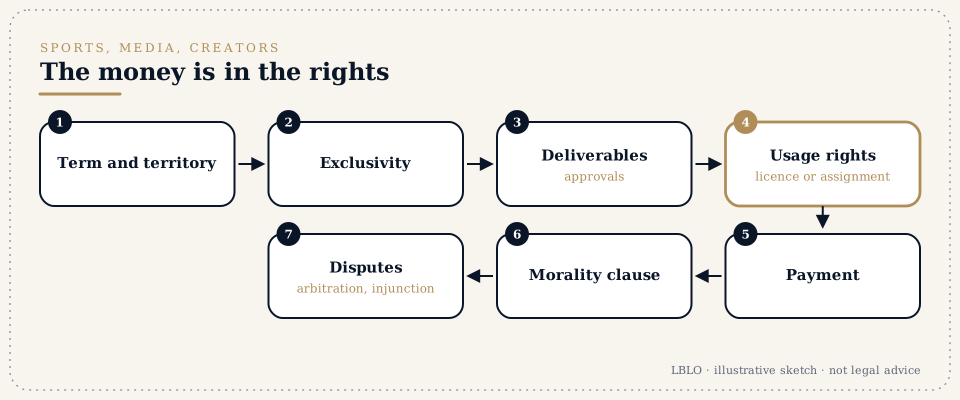
- The money is in the rights: who owns the content, the name and the likeness, for how long, in which territories, and on which platforms.
- Influencer and endorsement work must follow the advertising disclosure guidelines and the consumer protection rules on misleading advertisements. Undisclosed paid promotion can attract action against the brand and the creator.
- Personality rights. Courts in Delhi have protected the name, image, voice and likeness of well-known persons against unauthorised commercial use, including AI-generated imitations. This sits alongside the deepfakes page.
- The Office drafts and negotiates these contracts, protects rights, and handles disputes, including arbitration and urgent injunctions.
Terms you will hear
- Image rights and personality rights
- control over commercial use of a person's name, image, voice and persona.
- Exclusivity and category exclusivity
- not endorsing competing brands, or not endorsing within a product category.
- Morality clause
- a right to terminate if the talent's conduct harms the brand.
- Deliverables and approvals
- the posts, appearances or episodes required, and who approves them.
- Usage rights and term
- how long and where the brand can use the content.
- Work for hire and assignment versus licence
- whether the brand owns the content or only uses it.
- Minimum guarantee and revenue share
- fixed and variable payments, common in licensing and production.
- Right of first negotiation, first refusal, matching right
- priority rights over future deals.
In detail
1. Player and coach contracts.
These cover term, remuneration, bonuses, image-rights sharing, medical and injury terms, termination, and the governing rules of the federation or league. Disputes may go to the body's own tribunals before any court.
2. Sponsorship and endorsement.
Key clauses are:
- deliverables;
- exclusivity;
- usage rights after the term ends;
- the morality clause on both sides;
- payment milestones;
- approval timelines;
- indemnities.
3. Influencer campaigns.
- Disclosure labels ("ad", "paid partnership") must be clear and upfront.
- Claims need substantiation.
- The brand and agency should keep approval records.
4. Production and licensing.
- the chain of title for scripts and music;
- clearances;
- delivery schedules;
- censorship and certification (CBFC for films);
- OTT content rules;
- revenue accounting with audit rights.
5. Protecting personality and content.
Where a name or likeness is misused, including AI imitations, urgent injunctions and takedown orders against platforms are available in suitable cases.
Questions people ask
The brand wants to use my video forever. Is that standard?
No. Perpetual, worldwide, all-media usage should be priced accordingly or limited.
Must I label every paid post?
Yes. Paid or gifted collaborations need clear disclosure.
Can a brand drop me for a controversy?
If the contract has a morality clause and it applies, yes. The clause's wording decides.
Someone is selling merchandise with my face. What can I do?
A notice, platform takedowns and, where needed, a suit for injunction on personality rights and passing off.
Who owns the content an agency created for us?
The contract decides. Without an assignment, copyright may stay with the creator.
These answers are educational summaries; they are not legal advice on any individual matter.
A serious question deserves a read brief.
Conferences are by appointment at G-46, Basement, Greater Kailash III, New Delhi. The principal reads the correspondence.
This page gives general information about the work of Lokesh Bhardwaj Law Offices, as permitted under the Bar Council of India Rules. It is not legal advice, and it does not create an advocate-client relationship. LBLO acts in a matter only on an engagement agreed in writing.
Law stated as at 14/11/2026.